kalavidhiarts

Author name: admin

The Seven Elements of Art

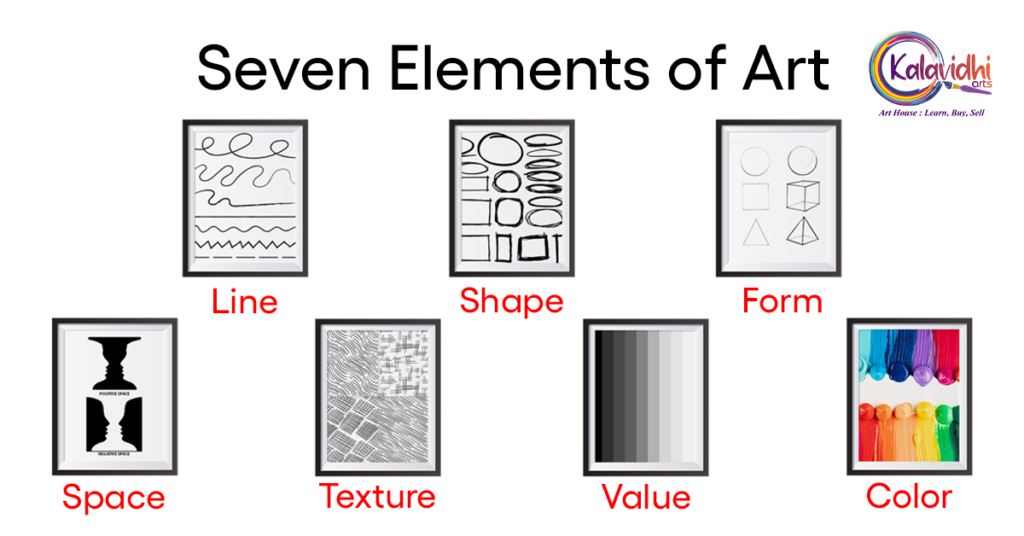
Subject, Form and Content have been the basic components of any work of Art. These are inter-twined in a way that all these points complete each other. Regardless of the type of Art, the most important consideration is what is done with the subject. If one can recognize the subject in a work then one can understand the motivation and elements used by the artist. 2. Form –This is the ‘how’ of any Art form. It refers to the development of work, composition, arrangement or substantiation. It results from using the elements of art, giving them order and meaning. By studying a work’s form, we are analyzing how the piece was created, more specifically why the artist made certain choices and how those choices interact to form the artwork’s final appearance. 3. Content – This is the ‘why’of any Art form. It shows the artist’s intention, communication, or meaning behind the work. It could be an emotional or intellectual message– a statement, expression, or mood developed by the artist and interpreted by the observer. Of the three components of art, content may be the most difficult to identify, because the audience, without direct communication with the artist, must decipher the artist’s thoughts by observing the work’s subject and form. The Seven Elements of Art The elements of art include line, texture, shape, form, space, color and value. These are the most basic, indispensable, and immediate building blocks for expression. Their characteristics, determined by the artist’s choice of media and techniques, can communicate a wide range of complex feelings. All artists must deal with the elements singularly or in combination, and their organization contributes to the aesthetic success or failure of a work. Based on the intended expression, each artist can arrange the elements in any manner that builds the desired character into the piece. However, the elements are given order and meaningful structure when arranged according to the principles of organization, which help integrate and organize the elements. The Seven Principles of Organization These principles of organization are rhythm, variety, balance, proportion, emphasis, movement, and unity. They help create spatial relationships and effectively convey the artist’s intent. The principles of organization are flexible, not dogmatic, and can be combined and applied in numerous ways. Some artists arrange intuitively, and others are more calculating, but with experience, all of them develop an instinctive feeling for organizing their work.

The Seven Elements of Art Read More »
kalavidhi arts

Different types of pencils and their use

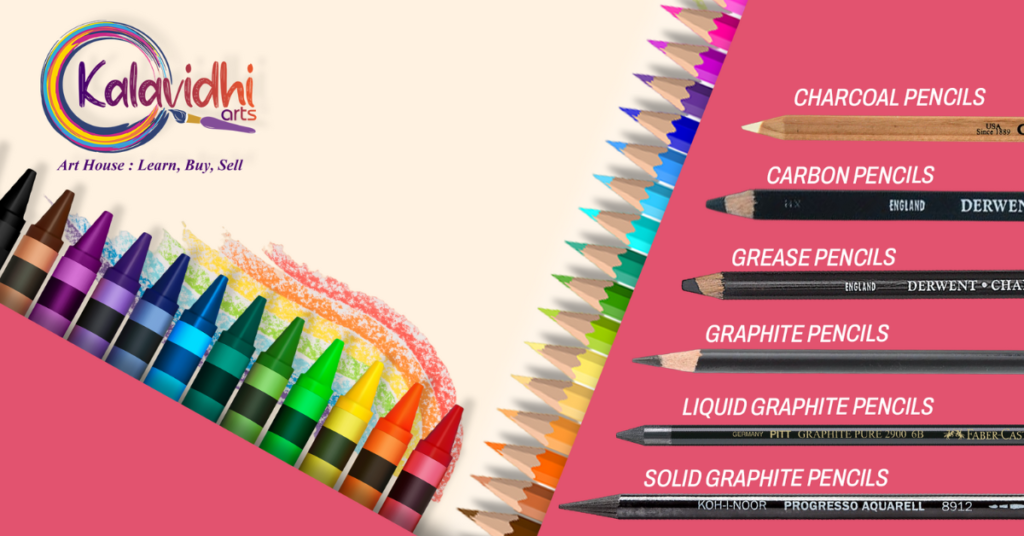
So, you want to take sketching a level higher. Great! Now, it is crucial for you to find the right tools and understand the importance of using different pencils. For example, in detailed drawing, you might want to use fine pens or pencils, but in preliminary drawing, you might use broader strokes. Which pencil is right for you? From the time the pencil industry began growing, different kinds, grades, and types of pencils were manufactured. Each one was graded and categorized according to hardness levels as well as the quantity or extent of black color it could produce. This means that they were categorized relating to how dark or light they were, and also how light or heavy their lead was. Choose your type of pencil from the chart below: Grade Degree of Hardness Best Used For 9B Very Soft Drawing, sketching, and shading 8B Very Soft Drawing, sketching, and shading 7B Very Soft Drawing, sketching, and shading 6B Very Soft Drawing, sketching, and shading 5B Soft Drawing, sketching, and shading 4B Soft Drawing, sketching, and shading 3B Soft Drawing, sketching, and shading 2B Soft Drawing, sketching, and shading B Soft Drawing, sketching, and shading HB Medium Writing as well as technical drawing F Medium Writing as well as technical drawing H Hard Marking crafts and technical drawing 2H Hard Technical drawing 3H Very Hard Technical drawings and detailed technical drawings 4H Very Hard Technical drawings and detailed technical drawings 5H Very Hard Technical drawings and detailed technical drawings 6H Extremely Hard For very special purposes 7H Extremely Hard For very special purposes 8H Extremely Hard For very special purposes The degree of hardness is usually printed on the pencil, especially if they are made specifically for drawing. Besides picking suitable pencils for you, you will also need to buy a sketchbook. Picking hardcover sketchbooks are better for both indoor and outdoor useover paperback ones. The hardcover provides support if you need to doodle, sketch or draw something. Few types of Pencils Graphite Pencils–Used by artists to draw expressive lines, andlight guidelines and realistic images, it also allows for smoother strokes. Solid Graphite Pencils – Used mainly by artists for drawing and art.These pencils are also available in the same hardness and grades as the ordinary graphite pencils. Liquid Graphite Pencils – Used by artists to create pencil sketches and genuine graphite pencil effects using a liquid. Charcoal Pencils – Used by artists to prevent hands being marked. Many famous artists made use of the charcoal pencil, for example, Georgia O’Keeffe, Leonardo da Vinci, Ernst Barlach, and Michelangelo. Carbon Pencils – Used toproduce thick and deeper black lines than the graphite pencil, which are difficult to erase. Colored Pencils or Crayons – Used by architects and children for drawing and coloring, as they are easy to use and are non-toxic. Grease Pencils – Used on glossy non-porous surfaces like glass, porcelain, rock, plastic, ceramics, metal, and polished stone. Watercolor Pencils –Used in wet state. First some dry pigment is put, followedby a damp brush. This helps spread the pigment, which intensifies the colors. This comes in as many as 120 different colors.

Different types of pencils and their use Read More »

How to Start Painting: Step-by-Step Learning with Kalavidhi Arts

The world of painting attracts everyone! People of all ages and occupations have an urge to paint, yet many never do. Some shy away from painting out of insecurity or false beliefs. Some people worry that they lack creativity because they believe painting is a skill that requires expensive instructions or natural talent. And some just don’t know where to begin. Daunted by various types and sizes of brushes, paints, and media available online and art store shelves, they withdraw, believing painting is too complex for them to understand alone. However, an experience as calming as learning to paint need not be scary. It can be a fulfilling and transformative journey, allowing you to capture your emotions, ideas, and the beauty of the world on canvas. All you need is the right attitude, happy mind, few good art supplies, practice and voila, you are good to roll! Kalavidhi Arts is a one-stop destination for beginners and experienced alike where one can connect, learn and express themselves through different forms of Art. Let’s take you through different steps: 1. Gathering Your ToolsExploring with painting is fun. There are many painting mediums that one can choose from So, the first step is to choose the materials for the medium you wish to explore. Select the medium that resonates with you, and assemble the basic supplies, including paint, brushes, canvas or paper, an easel, and a palette. 2. Overview of the BasicsBefore you make your first stroke, it’s essential to understand the fundamentals of painting. Kalavidhi Arts help you with basic understanding of color theory, color mixing, how to blend, shade, and highlight colors. Also, understanding brush techniques along with their application gives the much-needed confidence. Learning about balance, focal points and visually pleasing compositions allow you to achieve the desired effects in your artwork. 3. Seek InstructionsSeeking instructions from experienced artists or art instructors or forums like Kalavidhi Arts can provide invaluable guidance. Art classes, workshops, and online tutorials can help you refine your skills and gain new perspectives on the creative process. Don’t hesitate to ask for feedback and advice. 4. Practice makes the man or woman perfectThe key to mastering painting is practice. Allow yourself to experiment with different styles and subjects. Keeping a dedicated time for painting can work wonders. The more you paint, the more confident and skilled you will become. 5. Experiment and ExploreArt is all about self-expression and creativity. It is good to understand which method you are most comfortable with. This will allow you to personalize your learning and focus your efforts on that technique in future paintings. However, don’t be afraid to step out of your comfort zone and experiment with various techniques and styles. 6. Set GoalsSetting goals for your painting journey can help you stay motivated and focused. Whether it’s completing a certain number of paintings or mastering a particular technique, goals provide direction and purpose to your artistic endeavors. 7. Mistakes are Stepping StonesMistakes are an inherent part of the creative process. Don’t be discouraged by errors; instead, view them as opportunities for growth and discovery. 8. Celebrate Small StepsLearning to paint is a journey, not a destination. Be patient with yourself and your progress. Congratulate yourself on a confident brushstroke or a beautiful color interaction. The key is to persevere, enjoy the process, and let your passion for painting guide you. Learning to paint is a deeply enriching experience. It may not be a quick process but it is definitely engrossing and worthwhile. With Kalavidhi Arts, painting becomes a journey of self-discovery and a lifelong adventure that can be enjoyed by all. So, pick up your brushes, set up your easel, and let the colors flow!

How to Start Painting: Step-by-Step Learning with Kalavidhi Arts Read More »

Scroll to Top