kalavidhiarts

Painting

Sketching – How Doodling Can Enhance Your Mood

Sketching is an exercise for the hand, mind, and eyes. It may be a draft version or a rough outline of the final piece of work. It may or may not be regarded as finished work. It might be something that an artist sees or an idea or principle or a demonstration.It is also an activity that provides benefits that can be applied to many aspects of life, from work to relationships. It goes beyond the realm of artistic expertise. It can also be used as a tool to boost mood and foster creativity. Read More: How to Start Sketching – Beginner’s Guide Therapeutic Touch Sketching, in its simplest form, involves creating spontaneous drawings without the constraints of perfection or structured planning. This lack of pressure makes it an ideal activity for relaxation. Doodling serves as a therapeutic outlet for stress relief, providing a calming effect on the mind. Boosts Creativity The free-flowing nature of sketching encourages us to think beyond boundaries and foster innovative thinking. This leads to idea-generation in various aspects of life. Better Focus and Concentration Any form of art can enhance focus and concentration. With sketching, one looks for the finer details that require prolonged attention, thus improving concentration. Doodling and Stress Reduction Studies have shown that doodling can lower cortisol levels, a hormone associated with stress. The rhythmic and repetitive motions of sketching help create a sense of calmness, making it an effective tool for stress reduction. It acts as a mental break, allowing individuals to recharge and refocus. A few minutes of sketching each day can be a valuable addition to wellness practice. It gives moments to capture as well as introspect. Embrace the simplicity of sketching, and let your strokes create a masterpiece of mindfulness and mood enhancement in your daily life. Kalavidhi Arts is the perfect way to begin your Art journey with sketching. Our step-by-step sketchingtutorial introduces you to the world of sketching in the simplest yet compelling way.

Sketching – How Doodling Can Enhance Your Mood Read More »

Techniques and Tips for Acrylic Painting

Art has always been a medium of human expression, and one of its most versatile forms is painting. Over centuries, painting has evolved into various styles, each with its unique characteristics, techniques, and emotional impact. Acrylics are great for beginners. They are fairly easy to use, dry quickly and are cheaper to buy than oils or watercolours. A few simple acrylic painting tips will help you get started and enjoy the process of creating. Tips for Acrylic Painting Success While acrylic painting is incredibly versatile, there are some tips that can help artists achieve the best results: Work Quickly: Acrylic paint dries faster than other types of paint. It is always a good idea to know what you want to paint and get it on the canvas quickly. Keep Brushes Moist: Acrylics can dry quickly on brushes, so keep them moist when not in use. Use a palette to mix colors and prevent your paint from drying out too fast. Experiment with Different Surfaces: Canvas is a great surface to start but do not limit yourself to it. Acrylics can be used on a variety of surfaces, each of which offers unique opportunities for texture and effects. Work in Layers: Acrylics allow for layering, which is great for building up depth and correcting mistakes. Use Quality Paints: Invest in good-quality acrylic paints. Artist-grade paints have a higher pigment concentration and provide better color intensity and lightfastness. Seal Finished Artworks: If you wish to keep your acrylic painting for long, do protect it with a varnish or sealant. Techniques in Acrylic Painting Acrylic painting offers a wide array of techniques that artists can experiment with to create unique and compelling works of art. Some of these techniques include: Simple Layering: Acrylics are well-suited for layering. The ability to layer and experiment is a big benefit for beginners, but even professional artists like the flexibility of acrylics. Practice Blending: The quick-drying nature of acrylics can make blending a challenge. But, by practicing blending colors together, you’ll get comfortable with it. Additionally, they can be used for wet-on-wet blending or wet-on-dry layering. Impasto: Impasto is a technique where artists apply thick, textured layers of paint. Acrylics are ideal for this technique, as they hold their shape well when applied with a palette knife. Glazing: Acrylic glazing involves applying thin, transparent layers of paint over previously dried layers to create luminous and vibrant effects. Acrylic Pouring: This trendy technique involves mixing acrylic paint with a pouring medium and allowing it to flow across the canvas. It creates mesmerizing patterns and color interactions. Dry Brushing: By using a nearly dry brush and lightly skimming the surface, artists can create fine, textured details and highlights. Painting with acrylics is a great way to get introduced to painting and has many benefits. These paints are easy to use, spread evenly, and dry quickly. Whether you’re looking to create realistic landscapes, abstract masterpieces, or textured impasto works, acrylics provide the tools and the canvas to bring your artistic vision to life. The thumb rule that the more you paint, the more you’ll learn, and the better you’ll get applies here too. Kalavidhi Arts is the perfect way to begin your painting journey with acrylics. Our step-by-step painting and sketching tutorials introduce you to the world of arts in the simplest yet compelling way.

Techniques and Tips for Acrylic Painting Read More »

What is Acrylic Painting

Acrylic paintings are revered and regarded as timeless art forms, captivating artists and art enthusiasts alike with their dynamic characteristics and unparalleled versatility. It is a beloved art form and artists of all levels, from beginners to seasoned professionals, are drawn to the vibrant colors, quick drying time, and adaptability of acrylics. It is interesting to delve into the brilliant characteristics that make acrylic painting a captivating and accessible medium. 1. Vibrant and Intense Colors Acrylic paints are celebrated for their bold and brilliant colors. The pigment quality in acrylics allows artists to create artwork that pops with vividness. Whether you desire deep blues, radiant reds, or brilliant yellows, acrylics provide an extensive palette to choose from. 2. Fast Drying Time One of the most advantageous characteristics of acrylic paints is their rapid drying time. Unlike oil paints, which can take days or even weeks to dry, acrylics can be touch-dry in a matter of minutes. This quick drying time enables artists to work on multiple layers and details in a single session, making acrylics an ideal choice for those who prefer a more spontaneous approach. 3. Versatility in Application Acrylic paints can be applied to a wide range of surfaces, including canvas, paper, wood, fabric, and even unconventional materials like metal or plastic. This adaptability allows artists to explore their creativity across various platforms. 4. Opacity and Transparency Acrylic paints come in both opaque and transparent variations. Artists can select their preferred type based on their artistic intentions. Opaque acrylics provide excellent coverage and allow for layering, while transparent acrylics create luminous and translucent effects. 5. Textural Possibilities Acrylic painting offers artists the opportunity to experiment with various textures. Paints can be applied using brushes, palette knives, sponges, and even fingers, allowing for a multitude of textures and effects. This tactile quality adds depth and dimension to artwork. 6. Durability Acrylic paintings are known for their durability and resistance to aging. Once acrylic paint dries, it becomes waterproof and less susceptible to cracking or yellowing over time. This longevity ensures that acrylic artworks can withstand the test of time. 7. Mixing and Blending Acrylics can be easily mixed and blended on a palette to create a wide range of colors and shades. Artists can achieve smooth color transitions and gradients, offering infinite possibilities for creating the perfect hue. 8. Easy Clean-Up Unlike oil paints, acrylics are water-soluble and can be easily cleaned up with water and mild soap. This makes the painting process more convenient and environmentally friendly. 9. Compatibility with Other Media Acrylics are highly compatible with other artistic media, such as pastels, charcoal, and even watercolors. This compatibility opens up opportunities for mixed-media artwork, allowing artists to combine various techniques for unique and striking effects. 10. Accessibility Acrylic paints are readily available and come in various price ranges, making them accessible to artists of all budgets. They are an excellent choice for beginners and experts alike. Acrylic painting’s dynamic characteristics have solidified its place as a beloved medium for artists around the world. Whether you’re an expressive abstract painter or a meticulous realist, acrylics offer a colorful canvas for you to explore, experiment, and create art that captivates the eyes and stirs the soul. Kalavidhi Arts is the perfect way to begin your painting journey with acrylics. Our step-by-step painting and sketching tutorials introduce you to the world of arts in the simplest yet compelling way.

What is Acrylic Painting Read More »

kalavidhi arts

Different types of pencils and their use

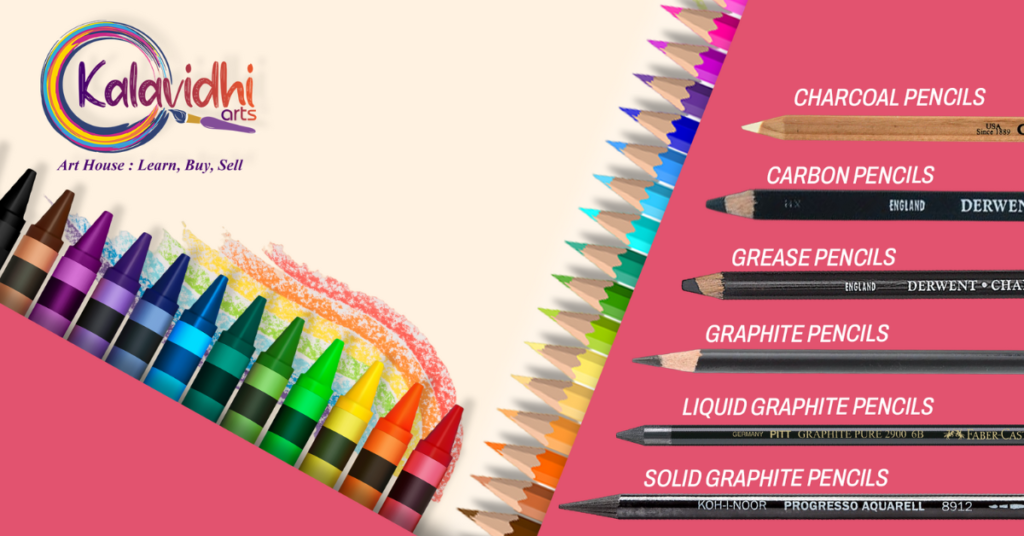
So, you want to take sketching a level higher. Great! Now, it is crucial for you to find the right tools and understand the importance of using different pencils. For example, in detailed drawing, you might want to use fine pens or pencils, but in preliminary drawing, you might use broader strokes. Which pencil is right for you? From the time the pencil industry began growing, different kinds, grades, and types of pencils were manufactured. Each one was graded and categorized according to hardness levels as well as the quantity or extent of black color it could produce. This means that they were categorized relating to how dark or light they were, and also how light or heavy their lead was. Choose your type of pencil from the chart below: Grade Degree of Hardness Best Used For 9B Very Soft Drawing, sketching, and shading 8B Very Soft Drawing, sketching, and shading 7B Very Soft Drawing, sketching, and shading 6B Very Soft Drawing, sketching, and shading 5B Soft Drawing, sketching, and shading 4B Soft Drawing, sketching, and shading 3B Soft Drawing, sketching, and shading 2B Soft Drawing, sketching, and shading B Soft Drawing, sketching, and shading HB Medium Writing as well as technical drawing F Medium Writing as well as technical drawing H Hard Marking crafts and technical drawing 2H Hard Technical drawing 3H Very Hard Technical drawings and detailed technical drawings 4H Very Hard Technical drawings and detailed technical drawings 5H Very Hard Technical drawings and detailed technical drawings 6H Extremely Hard For very special purposes 7H Extremely Hard For very special purposes 8H Extremely Hard For very special purposes The degree of hardness is usually printed on the pencil, especially if they are made specifically for drawing. Besides picking suitable pencils for you, you will also need to buy a sketchbook. Picking hardcover sketchbooks are better for both indoor and outdoor useover paperback ones. The hardcover provides support if you need to doodle, sketch or draw something. Few types of Pencils Graphite Pencils–Used by artists to draw expressive lines, andlight guidelines and realistic images, it also allows for smoother strokes. Solid Graphite Pencils – Used mainly by artists for drawing and art.These pencils are also available in the same hardness and grades as the ordinary graphite pencils. Liquid Graphite Pencils – Used by artists to create pencil sketches and genuine graphite pencil effects using a liquid. Charcoal Pencils – Used by artists to prevent hands being marked. Many famous artists made use of the charcoal pencil, for example, Georgia O’Keeffe, Leonardo da Vinci, Ernst Barlach, and Michelangelo. Carbon Pencils – Used toproduce thick and deeper black lines than the graphite pencil, which are difficult to erase. Colored Pencils or Crayons – Used by architects and children for drawing and coloring, as they are easy to use and are non-toxic. Grease Pencils – Used on glossy non-porous surfaces like glass, porcelain, rock, plastic, ceramics, metal, and polished stone. Watercolor Pencils –Used in wet state. First some dry pigment is put, followedby a damp brush. This helps spread the pigment, which intensifies the colors. This comes in as many as 120 different colors.

Different types of pencils and their use Read More »

How to Start Painting: Step-by-Step Learning with Kalavidhi Arts

The world of painting attracts everyone! People of all ages and occupations have an urge to paint, yet many never do. Some shy away from painting out of insecurity or false beliefs. Some people worry that they lack creativity because they believe painting is a skill that requires expensive instructions or natural talent. And some just don’t know where to begin. Daunted by various types and sizes of brushes, paints, and media available online and art store shelves, they withdraw, believing painting is too complex for them to understand alone. However, an experience as calming as learning to paint need not be scary. It can be a fulfilling and transformative journey, allowing you to capture your emotions, ideas, and the beauty of the world on canvas. All you need is the right attitude, happy mind, few good art supplies, practice and voila, you are good to roll! Kalavidhi Arts is a one-stop destination for beginners and experienced alike where one can connect, learn and express themselves through different forms of Art. Let’s take you through different steps: 1. Gathering Your ToolsExploring with painting is fun. There are many painting mediums that one can choose from So, the first step is to choose the materials for the medium you wish to explore. Select the medium that resonates with you, and assemble the basic supplies, including paint, brushes, canvas or paper, an easel, and a palette. 2. Overview of the BasicsBefore you make your first stroke, it’s essential to understand the fundamentals of painting. Kalavidhi Arts help you with basic understanding of color theory, color mixing, how to blend, shade, and highlight colors. Also, understanding brush techniques along with their application gives the much-needed confidence. Learning about balance, focal points and visually pleasing compositions allow you to achieve the desired effects in your artwork. 3. Seek InstructionsSeeking instructions from experienced artists or art instructors or forums like Kalavidhi Arts can provide invaluable guidance. Art classes, workshops, and online tutorials can help you refine your skills and gain new perspectives on the creative process. Don’t hesitate to ask for feedback and advice. 4. Practice makes the man or woman perfectThe key to mastering painting is practice. Allow yourself to experiment with different styles and subjects. Keeping a dedicated time for painting can work wonders. The more you paint, the more confident and skilled you will become. 5. Experiment and ExploreArt is all about self-expression and creativity. It is good to understand which method you are most comfortable with. This will allow you to personalize your learning and focus your efforts on that technique in future paintings. However, don’t be afraid to step out of your comfort zone and experiment with various techniques and styles. 6. Set GoalsSetting goals for your painting journey can help you stay motivated and focused. Whether it’s completing a certain number of paintings or mastering a particular technique, goals provide direction and purpose to your artistic endeavors. 7. Mistakes are Stepping StonesMistakes are an inherent part of the creative process. Don’t be discouraged by errors; instead, view them as opportunities for growth and discovery. 8. Celebrate Small StepsLearning to paint is a journey, not a destination. Be patient with yourself and your progress. Congratulate yourself on a confident brushstroke or a beautiful color interaction. The key is to persevere, enjoy the process, and let your passion for painting guide you. Learning to paint is a deeply enriching experience. It may not be a quick process but it is definitely engrossing and worthwhile. With Kalavidhi Arts, painting becomes a journey of self-discovery and a lifelong adventure that can be enjoyed by all. So, pick up your brushes, set up your easel, and let the colors flow!

How to Start Painting: Step-by-Step Learning with Kalavidhi Arts Read More »

Scroll to Top