kalavidhiarts

Author name: admin

CLASSES and COURSES

Weekday Classes These are designed to be both enjoyable and educational, offering a structured environment to learn and develop new art forms. 1. Frequency and Duration: Three classes a week for a duration of one hour each 2. Fees: Rs. 10,000 per month 3. Batch Timings: Morning Batch: 10:00 am to 12:00 pm Evening Batch: 5:00 pm to 7:00 pm 4. Home Classes: Weekday hobby classes are also offered with an option of home classes.Fees for home classes may vary. Weekend Classes (Saturday and Sunday) 1. Frequency and Duration: Two classes for a duration of two hours each 2. Fees: Rs. 7,000 per month 3. Batch Timings: Morning Batch: 10:00 am to 12:00 pm Evening Batch: 5:00 pm to 7:00 pm 4. Home Classes: Weekend hobby classes are also offered with an option of home classes. Fees for home classes may vary. How to Enroll: These classes are open for all age groups. Interested individuals can fill the registration form here. Benefits of Hobby Classes: A three-month certificate program is an intensive and focused course designed to equip participants with a specific set of skills or knowledge in Arts. On completion of program, a certificate of participation will be provided to eligible participants. The course structure and curriculum will be shared with the interested participants. 1. Frequency and Duration: Three classes a week for a duration of one hour each for a period of three months 2. Fees: Rs. 30,000 per student for the entire course. This is the enrollment fee for the program, excluding any material and resources 3. Batch Timings: Morning Batch: 10:00 am to 12:00 pm Evening Batch: 5:00 pm to 7:00 pm Career Guidance A unique feature of this certificate program is the inclusion of career guidance sessions.Experienced professionals or career counselors will conduct these sessions, providing valuable insights and advice.These sessions aim to help participants understand how the skills acquired during the program can be applied in real-world scenarios and guide them towards potential career paths. How to Enroll: This program is open for all age groups. Interested individuals can fill the registration form here.Limited seats are available, so early registration is encouraged to secure a spot. Benefits of ThreeMonths Certificate Program:    Coming Soon….

CLASSES and COURSES Read More »

Acrylic Painting – A Beginner’s Guide

Acrylic painting is a wonderful skill to learn, and one of the easiest paints to work with if you’re new to the world of painting.Acrylic paint is fairly new to the art world in the grand scheme of things. It was introduced in the 1960’s and is widely used by professional artists today. It can easily be a favorite among different painting mediums for its versatility and vibrancy! Acrylic painting is approachable for beginner and professional artists alike. One can get bright and bold tones by mixing these colors. Another wonderful property of acrylic paints is that it can be changed by mixing with various mediums and materials. For example, it can be diluted with water to create a watercolor effect, but it can also be mixed with a gel medium to get a textured impasto look. Another great thing about acrylic paint is that it can bond with a variety of different surfaces including glass, wood, canvas, metal, paper, and more.  Unlike other paints, acrylic paint is water soluble and can create a translucent effect. One of the biggest benefits of acrylic paint is that it dries quickly. So, not much muddying happens. When it comes to acrylic paint, it is prudent to keep an open mind and exploring new techniques. So, let’s dive into learning acrylic painting step-by-step! Step 1: Get your tools and mindset ready Acrylics are not a high-maintenance medium. You need just four simple tools to get started with acrylics: the paint itself, a brush, a cup of water, and a surface (commonly known to artists as a support) and a ventilated space. Once you are comfortable with the medium go for high pigmentpaints, solvents, canvas or board. Types of Brushes Color Theory Step 2: Choose your subject Now that we’ve covered the painting supplies, you are going to need to pick an idea of what to paint.It seems like an easy enough task, but it could be the most challenging one, especially when you’re just beginning.First off, pick up something that’s not too hard and not too challenging. Choosing the right difficulty level of painting is important so that you enjoy the process and feel empowered to learn and paint more! Some simple ideas could be flowers from your garden, vase of flowers, a bowl of fruit (or individual fruits), simple landscape, beach scene, sunset scene etc. Step 3: Preliminary Drawing Drawing is the first step for a successful painting! This will help you position the principle elements in space, and define forms and proportions.This will guide you better as the painting progresses and everything will stay in proper proportion.Lightly draw the painting’s main features with a soft pencil that can be covered with paints later. Using a grid or tracing paper can also help in this step. Step 4: Application of colors Acrylic colors are water soluble so applying the paint as thin layers works best – moving from lightest to darkest. Don’t forget to let each layer of paint dry before applying the next one: This allows colors and touch to remain fresh and sharp. Step 5: Adding details to the painting The final step involves adding the elements that put life in your painting. Strengthen colors, add texture, volume and highlights. If you wish to have a colored background, start with applying a diluted colorwash. Wait until the background is dry to add colors.Be patient and practice a lot to understand what interests you and makes your painting journey enjoyable. Kalavidhi Art-vantages! Share your acrylic paintings on your Instagram and Facebook accounts, tag Kalavidhi Arts and get featured on Kalavidhi Arts Instagram and Facebook page Happy Painting!

Acrylic Painting – A Beginner’s Guide Read More »

Oil Painting – A Beginner’s Guide

Oil painting, as the name suggests is a type of painting made using oil-based paints. It involves using pigments that use a medium of drying oil as the binder and painting with them on a canvas. The most common types of oil in oil paints are linseed oil, walnut oil, poppy seed oil, and safflower oil. It has been the most common technique for painting on canvas, wood panel or copper for several centuries, spreading from Europe to the rest of the world. The advantages of oil for painting are greater flexibility, richer and denser colour, use of layers, and a wider range from light to dark. But the process is generally slow as one layer of paint needs to be allowed to dry before another is applied. Some of the famous oil paintings include Mona Lisa by Leonardo da Vinci, The Anatomy Lesson of Dr. Nicolaes Tulp by Rembrandt, The Milkmaid by Johannes Vermeer,The Blue Boy by Thomas Gainsborough, Portrait of Dr. Gachet by Vincent Van Gogh, The Old Guitarist by Pablo Picasso etc. Are you ready to learn oil painting step-by-step? Step 1: Get your tools and mindset ready Collect your basic supplies for oil painting like canvas, brushes, oil paints, palette and palette knife if you wish to be a little ambitious for your first outing, a blending medium or a thinner and some other stuff like cleaning cloth, jars for cleaning brushes. Step 2: Choose your subject Being a beginner, it is prudent todevelop your hand on simple subjects such as still life forms. Landscape and portraits are more complex and advanced themes. Step 3: Decide on the composition of painting Before painting, it’s important to decide on the composition. This would include the placement of object,lighting, shadows, highlights, other lines and shapes in the background, colors and overall balance of the subject. Observing the object, checking it in different angles, focusing on any one detail etc. will add interest in your painting. Take some time to do this step! Step 4: Create a rough sketch Use a hard pencil to create a light sketch of the subject. Keep the sketch very light so that it doesn’t show through the paint; even in a very neutral, diluted color.You can also do this directly onto the canvas or onto tracing paper, and transfer it using a carbon copy. Step 5: Start painting In oil painting, it is recommended to use the thin-to-thick method in which you paint with thin paint before using thick paint.That means each succeeding layer should be slightly “thicker,” means it contains more oil than the previous one. To achieve this, highly dilute the first layers, with the following ones less and less diluted. Color knowledge, creating a hue, tint, tone, shade etc. come in handy. But what is Art without experimenting? So, go ahead and paint with colors you like. Step 6: Final touches It takes about three days for the paint to get dry and this is the time when you can alter any mistakes or remove them completely with a damp rag. Before you decide the painting is complete, take a step back and look at the painting in its totality to see if any changes are needed, evaluate it. Be your first viewer! Don’t hurry! Fine-tune your piece gradually, add lights, work on the shadows, and refine the details. And then the best part – sign your work! Kalavidhi Art-vantages! Share your oil paintings on your Instagram and Facebook accounts, tag Kalavidhi Arts and get featured on Kalavidhi Arts Instagram and Facebook page Happy Painting!

Oil Painting – A Beginner’s Guide Read More »

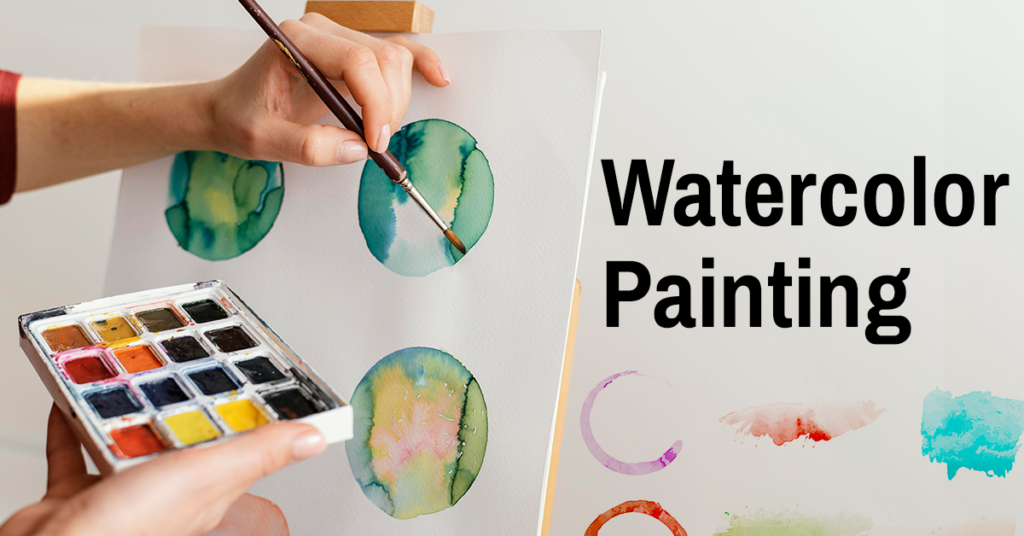
Watercolor Painting – Beginner’s Guide

Watercolour medium is fun to play with. It is one of the primitive types of painting. These are cost effective, give a lot of possibilities for creative self-expression, are non-toxic and water-based. So, if you’re just a beginner or want to get your creative juices flowing, watercolor paintings are a great start! Watercolor being a versatile and flexible medium can yield a variety of results. Despite being a tricky medium to master, there are various watercolor techniques you can adopt as your own to create a skill worth pursuing. So, lets get going! Step 1: Get your tools and mindset ready When you’re first starting out, you don’t need anything fancy.The basics include a brush, watercolor paper, and a few paints. You don’t even need an entire range of colors just the basic red, blue and yellow will do.Get a palette for mixing colors and two containers for water – one for cleaning brush and one for wetting brush. Step 2: Color Theory and Color Mixing It is important to understand the primary colors (red, blue, yellow) and what secondary colors we get by mixing them. Also, familiarising oneself with color wheel to grasp complementary and analogous color schemes comes in handy. Click here for Color Theory Click here to know more about Brushes Step 3: Wash Techniques Technique 1: Wet-on-Wet washes This means applying wet paint on wet paper for soft and blended effects. These are great for backgrounds. To create this type of wash, lightly brush the wash area on your paper with water. Make sure that the water coats the whole area evenly. Next, fill a large flat brush with color. Now, slowly with a steady hand paint an even line at the top of your practice wet area. Be ready for an unexpected gradient that creates beautiful blooms as it dries. Technique 2: Wet-on-Dry washes This means applying wet paint on dry paper for lighter effects. Creating a wash on dry paper gives more control over the outcome and the overall look of the gradient. To create a gradient with wet-on-dry technique, load up the brush with color and paint a line across the top of wash area. Continue to paint strokes downward, dipping the brush in the water each time. Dipping your brush in water after each stroke desaturates the pigment and creates an ombre gradient effect. Step 4: Watercolor Techniques Technique 1: Layering Layering with colors can add depth and richness of the color. Technique 2: Blending Blending means dropping little bits of pigment (color) into the wet areas of the paining. These bloom outward and add a dark shade of the color. Make sure the segment of the painting that you’d like to blend is still wet. From there simply dot in the color you want to add and watch it bloom! Step 5: Brush Control Brush control takes practice and is an important part of watercolor journey. Step 6: Practice No matter what you do, practice makes one perfect. If you want to get better at painting, the same advice applies: keep practicing. Steadily working on perfecting your skills will help you grow as an artist and push you to learn new styles. Kalavidhi Art-vantages! Share your watercolor paintings on your Instagram and Facebook accounts, tag Kalavidhi Arts and get featured on Kalavidhi Arts Instagram and Facebook page. Happy Painting!

Watercolor Painting – Beginner’s Guide Read More »

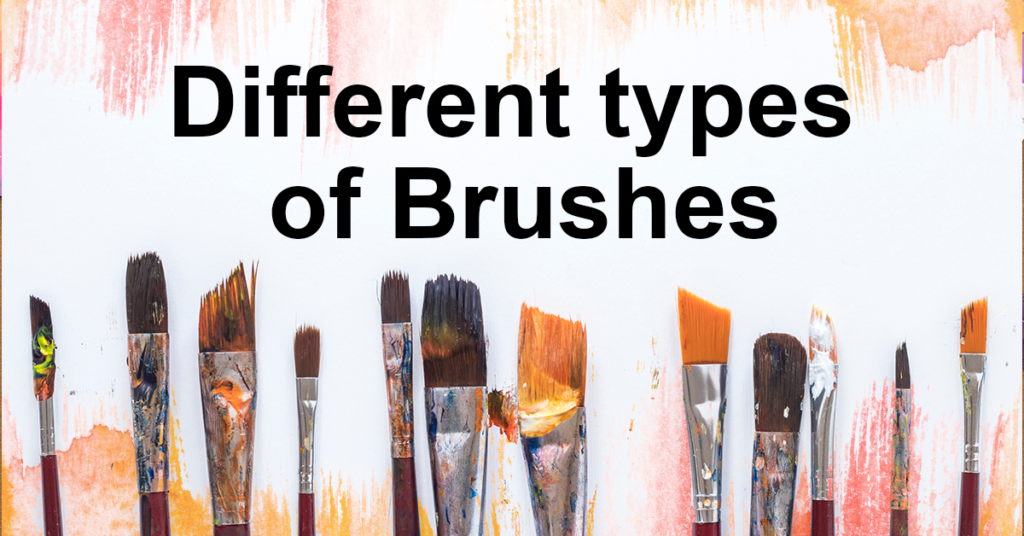
Brushing Brilliance: Different Types of Brushes

Most of the magic that one creates while painting is due to the way one maneuvers the paint brush. Therefore, paint brush is one of the most beloved tools of an artist. If you are new to this realm of painting then the first thing you should know is what kind of brush you should use. Now, that can be a bit daunting if you don’t know much about the paint brushes. So, here we will learn all about different types of paint brushes! Different types of Paint Brushes Name of the Brush Shape Versatility Uses Photo Flat Brush Wide and flat Bold strokes Cover large areas Create straight edges Backgrounds Washes Broad strokes   Round Brush Tapered with a pointed tip Fine lines Details Intricate work Outlining Detailing Intricate work   Filbert Brush Flat with rounded tips Benefits of flat and round brushes, versatile for various strokes Blending Soft edges Creating foliage   Fan Brush Flat spread out like a fan Unique textures Soft blending Blending Creating textures   Liner Brush Long and thin with a fine point Fine lines Details Outlining Intricate details Lettering   Angular Brush Flat with angled tips Broad strokes Precise lines Angular shapes Sharp edges Controlled detailing   Bright Brush Shorter and flatter More control  More precision Highlights Short strokes Controlled detailing   Choosing the right brush depends on the artist’s intent, style, and the desired effect. Experimenting with various brushes opens up a world of creative possibilities, allowing artist to express themselves with nuance and precision on their artistic journey.

Brushing Brilliance: Different Types of Brushes Read More »

Fundamentals of Color Theory

Color theory is both the science and art of using color. It explains how humans perceive color; and the visual effects of how colors mix, match or contrast with each other. Color theory also involves the messages colors communicate; and the methods used to replicate color. In color theory, colors are organized on a color wheel and grouped into 3 categories: primary colors, secondary colors and tertiary colors. Understanding the fundamentals of color theory lays the foundation for creating visually harmonious and impactful artworks. Let’s embark on a journey through the vibrant spectrum of color theory. 1. Primary Colors: At its core, color is derived from light. The primary colors—red, blue, and yellow—form the basis for all other colors. Mixing these primaries produces secondary colors: orange, green, and purple. 2. Color Wheel: The color wheel is a visual representation of the color spectrum. It helps artists understand the relationships between colors. Primary colors are spaced evenly, with secondary colors placed between them. 3. Color Harmony: Creating a harmonious palette involves understanding color relationships. Key harmonies include: Complementary Colors: Colors opposite each other on the wheel (e.g., red and green). Analogous Colors: Colors adjacent to each other (e.g., blue, blue-green, and green). Triadic Colors: Colors evenly spaced around the wheel (e.g., red, blue, and yellow). 4. Warm and Cool Colors: Colors are often categorized as warm (reds, oranges, yellows) or cool (blues, greens, purples). Warm colors evoke energy and vibrancy, while cool colors suggest calmness and tranquility. 5. Tints, Shades, and Tones: Manipulating the intensity of a color adds depth to artworks. A tint is a color mixed with white, a shade with black, and a tone with gray. 6. Color Psychology: Colors have psychological effects on viewers. Red symbolizes passion and energy, blue conveys calmness, and yellow exudes positivity. Artists can leverage these associations to evoke specific emotions. 7. Color in Composition: Understanding color’s role in composition is vital. Focal points can be emphasized using contrasting colors, while analogous colors create a sense of unity. 8. Color Mixing: Mastery of color mixing expands an artist’s palette. Acquiring knowledge of color relationships helps predict outcomes when mixing different hues. Color theory is important as it empowers artists to communicate more effectively through their work. It transforms the canvas into a playground of emotions and narratives, where every hue tells a story. So, whether you’re a seasoned artist or just starting your creative journey, dive into the world of color theory and paint your imagination with the richness it deserves.

Fundamentals of Color Theory Read More »

Sketching – How Doodling Can Enhance Your Mood

Sketching is an exercise for the hand, mind, and eyes. It may be a draft version or a rough outline of the final piece of work. It may or may not be regarded as finished work. It might be something that an artist sees or an idea or principle or a demonstration.It is also an activity that provides benefits that can be applied to many aspects of life, from work to relationships. It goes beyond the realm of artistic expertise. It can also be used as a tool to boost mood and foster creativity. Read More: How to Start Sketching – Beginner’s Guide Therapeutic Touch Sketching, in its simplest form, involves creating spontaneous drawings without the constraints of perfection or structured planning. This lack of pressure makes it an ideal activity for relaxation. Doodling serves as a therapeutic outlet for stress relief, providing a calming effect on the mind. Boosts Creativity The free-flowing nature of sketching encourages us to think beyond boundaries and foster innovative thinking. This leads to idea-generation in various aspects of life. Better Focus and Concentration Any form of art can enhance focus and concentration. With sketching, one looks for the finer details that require prolonged attention, thus improving concentration. Doodling and Stress Reduction Studies have shown that doodling can lower cortisol levels, a hormone associated with stress. The rhythmic and repetitive motions of sketching help create a sense of calmness, making it an effective tool for stress reduction. It acts as a mental break, allowing individuals to recharge and refocus. A few minutes of sketching each day can be a valuable addition to wellness practice. It gives moments to capture as well as introspect. Embrace the simplicity of sketching, and let your strokes create a masterpiece of mindfulness and mood enhancement in your daily life. Kalavidhi Arts is the perfect way to begin your Art journey with sketching. Our step-by-step sketchingtutorial introduces you to the world of sketching in the simplest yet compelling way.

Sketching – How Doodling Can Enhance Your Mood Read More »

Techniques and Tips for Acrylic Painting

Art has always been a medium of human expression, and one of its most versatile forms is painting. Over centuries, painting has evolved into various styles, each with its unique characteristics, techniques, and emotional impact. Acrylics are great for beginners. They are fairly easy to use, dry quickly and are cheaper to buy than oils or watercolours. A few simple acrylic painting tips will help you get started and enjoy the process of creating. Tips for Acrylic Painting Success While acrylic painting is incredibly versatile, there are some tips that can help artists achieve the best results: Work Quickly: Acrylic paint dries faster than other types of paint. It is always a good idea to know what you want to paint and get it on the canvas quickly. Keep Brushes Moist: Acrylics can dry quickly on brushes, so keep them moist when not in use. Use a palette to mix colors and prevent your paint from drying out too fast. Experiment with Different Surfaces: Canvas is a great surface to start but do not limit yourself to it. Acrylics can be used on a variety of surfaces, each of which offers unique opportunities for texture and effects. Work in Layers: Acrylics allow for layering, which is great for building up depth and correcting mistakes. Use Quality Paints: Invest in good-quality acrylic paints. Artist-grade paints have a higher pigment concentration and provide better color intensity and lightfastness. Seal Finished Artworks: If you wish to keep your acrylic painting for long, do protect it with a varnish or sealant. Techniques in Acrylic Painting Acrylic painting offers a wide array of techniques that artists can experiment with to create unique and compelling works of art. Some of these techniques include: Simple Layering: Acrylics are well-suited for layering. The ability to layer and experiment is a big benefit for beginners, but even professional artists like the flexibility of acrylics. Practice Blending: The quick-drying nature of acrylics can make blending a challenge. But, by practicing blending colors together, you’ll get comfortable with it. Additionally, they can be used for wet-on-wet blending or wet-on-dry layering. Impasto: Impasto is a technique where artists apply thick, textured layers of paint. Acrylics are ideal for this technique, as they hold their shape well when applied with a palette knife. Glazing: Acrylic glazing involves applying thin, transparent layers of paint over previously dried layers to create luminous and vibrant effects. Acrylic Pouring: This trendy technique involves mixing acrylic paint with a pouring medium and allowing it to flow across the canvas. It creates mesmerizing patterns and color interactions. Dry Brushing: By using a nearly dry brush and lightly skimming the surface, artists can create fine, textured details and highlights. Painting with acrylics is a great way to get introduced to painting and has many benefits. These paints are easy to use, spread evenly, and dry quickly. Whether you’re looking to create realistic landscapes, abstract masterpieces, or textured impasto works, acrylics provide the tools and the canvas to bring your artistic vision to life. The thumb rule that the more you paint, the more you’ll learn, and the better you’ll get applies here too. Kalavidhi Arts is the perfect way to begin your painting journey with acrylics. Our step-by-step painting and sketching tutorials introduce you to the world of arts in the simplest yet compelling way.

Techniques and Tips for Acrylic Painting Read More »

What is Acrylic Painting

Acrylic paintings are revered and regarded as timeless art forms, captivating artists and art enthusiasts alike with their dynamic characteristics and unparalleled versatility. It is a beloved art form and artists of all levels, from beginners to seasoned professionals, are drawn to the vibrant colors, quick drying time, and adaptability of acrylics. It is interesting to delve into the brilliant characteristics that make acrylic painting a captivating and accessible medium. 1. Vibrant and Intense Colors Acrylic paints are celebrated for their bold and brilliant colors. The pigment quality in acrylics allows artists to create artwork that pops with vividness. Whether you desire deep blues, radiant reds, or brilliant yellows, acrylics provide an extensive palette to choose from. 2. Fast Drying Time One of the most advantageous characteristics of acrylic paints is their rapid drying time. Unlike oil paints, which can take days or even weeks to dry, acrylics can be touch-dry in a matter of minutes. This quick drying time enables artists to work on multiple layers and details in a single session, making acrylics an ideal choice for those who prefer a more spontaneous approach. 3. Versatility in Application Acrylic paints can be applied to a wide range of surfaces, including canvas, paper, wood, fabric, and even unconventional materials like metal or plastic. This adaptability allows artists to explore their creativity across various platforms. 4. Opacity and Transparency Acrylic paints come in both opaque and transparent variations. Artists can select their preferred type based on their artistic intentions. Opaque acrylics provide excellent coverage and allow for layering, while transparent acrylics create luminous and translucent effects. 5. Textural Possibilities Acrylic painting offers artists the opportunity to experiment with various textures. Paints can be applied using brushes, palette knives, sponges, and even fingers, allowing for a multitude of textures and effects. This tactile quality adds depth and dimension to artwork. 6. Durability Acrylic paintings are known for their durability and resistance to aging. Once acrylic paint dries, it becomes waterproof and less susceptible to cracking or yellowing over time. This longevity ensures that acrylic artworks can withstand the test of time. 7. Mixing and Blending Acrylics can be easily mixed and blended on a palette to create a wide range of colors and shades. Artists can achieve smooth color transitions and gradients, offering infinite possibilities for creating the perfect hue. 8. Easy Clean-Up Unlike oil paints, acrylics are water-soluble and can be easily cleaned up with water and mild soap. This makes the painting process more convenient and environmentally friendly. 9. Compatibility with Other Media Acrylics are highly compatible with other artistic media, such as pastels, charcoal, and even watercolors. This compatibility opens up opportunities for mixed-media artwork, allowing artists to combine various techniques for unique and striking effects. 10. Accessibility Acrylic paints are readily available and come in various price ranges, making them accessible to artists of all budgets. They are an excellent choice for beginners and experts alike. Acrylic painting’s dynamic characteristics have solidified its place as a beloved medium for artists around the world. Whether you’re an expressive abstract painter or a meticulous realist, acrylics offer a colorful canvas for you to explore, experiment, and create art that captivates the eyes and stirs the soul. Kalavidhi Arts is the perfect way to begin your painting journey with acrylics. Our step-by-step painting and sketching tutorials introduce you to the world of arts in the simplest yet compelling way.

What is Acrylic Painting Read More »

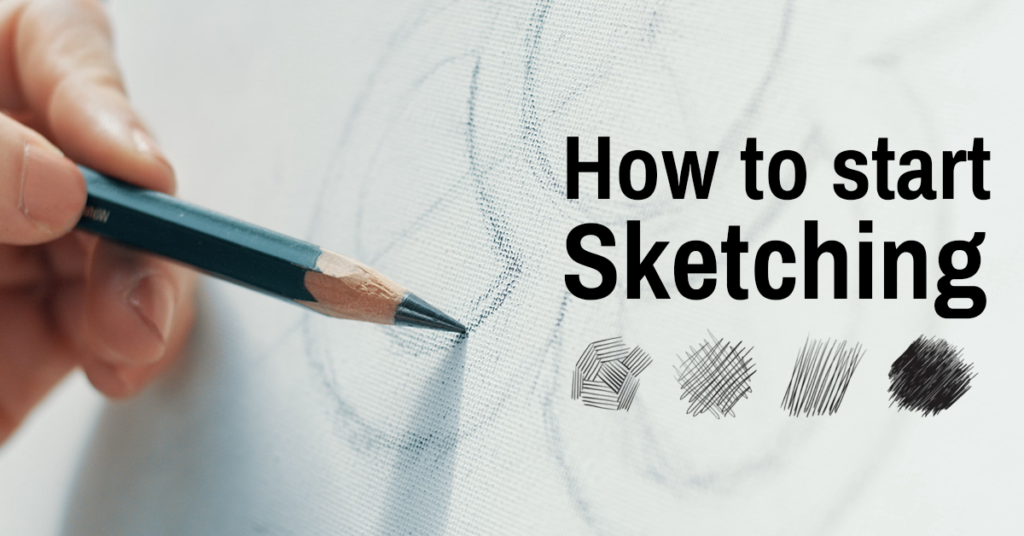
How to Start Sketching – Beginner’s Guide

A sketch is referred to as a freehand drawing. It may be a draft version or a rough outline of the final piece of work. It may or may not be regarded as finished work. It might be something that an artist sees or an idea or principle or a demonstration. Sketching is the most inexpensive art medium. Sketches can be made in any drawing medium. It can be done in silver point, graphite, pencil, charcoal or pastel. Pen and ink, such as a digital pen, ballpoint pen, marker pen, water colour and oil paint can also be used. So, are you ready to get started with sketching Step1: Get your tools and mindset ready For starters, sketching only needs a pen, paper and creativity. It’s always a good idea to warm up a bit and get your drawing muscles loosen up. As you get comfortable, let the creativity flow. Check here for different types of pencils. Step 2: Make hand-eye coordination Train your hand-eye coordination a bit. Practice drawing a few straight and curved lines – both long and short. Then draw a few round shapes like circles and ellipses. Try to vary the size and pressure of your pen/pencil. Register any changes that you see if you draw with your entire arm or locking the elbow and wrist. Step 3: Start with baby steps Sketching, especially for beginners, is all about exploring and making all the possible mistakes. All objects can be broken down into basic shapes. So, start sketching loosely with simple shapes and light lines. Don’t bother about getting the perfect curves or shape. Try to get the outline and proportions right. This will produce a perfect draft that you can work with and refine at later stage. Step 4: Refine Once you have the outline ready, find areas that need improvement. Try to sharpen the curves, edges, lines, angles and sketch until you get your desired result. Step 5: Define In this stage, try to make defined shapes, add more volume, draw confident bold and light lines, introduce few details and texture in few places.   Step 6: Practice No matter what you do, practice makes one perfect. If you want to get better at sketching, the same advice applies: keep practicing.Steadily working on perfecting your skills will help you grow as an artist and push you to learn new skills. Kalavidhi Art-vantages! Share your sketches on Instagram and FB, tag Kalavidhi Arts and get featured on Kalavidhi Arts Instagram and Facebook page.

How to Start Sketching – Beginner’s Guide Read More »

Scroll to Top